
Investing in Nigerian real estate, especially residential property, can be incredibly rewarding – but it’s not without challenges. Prospective investors often worry about land disputes, sudden demolitions, unclear property zoning, and delays in approvals or permits. These issues are real: land-related conflicts make up a significant portion of legal cases in Nigeria (roughly 30% of the country’s 27.5 million annual legal issues are land disputes, and about 65% of civil court cases are tied to land disagreements). The good news is that with the right knowledge and due diligence, you can avoid these pitfalls. This educational guide answers common questions and provides research-backed insights on how to safeguard your property investments in Nigeria.
Understanding Land Disputes and How to Avoid Them
Land disputes in Nigeria range from boundary overlaps and multiple claimants to fraudulent sales and inheritance fights. Imagine buying a plot only to later face “a barrage of legal challenges, fraudulent documentation, disputes over boundaries, or even conflicts with the local community”. These conflicts can drain finances, delay projects, and turn a dream investment into a nightmare. In fact, land disputes are “one of the leading causes of property loss in Nigeria”, and court battles over land can drag on for years.
Why do they happen?
Often because of unclear titles or bad surveys. Without a proper survey plan and verifiable title documents, what starts as a friendly handshake deal can “turn into a heated conflict that can drag for years in court”. Inaccurate mapping by unregistered surveyors or missing boundary markers lead neighbors to unwittingly encroach on each other’s land. Additionally, fraudsters sometimes sell the same land to multiple buyers, leaving unsuspecting investors entangled in litigation. And in areas with strong customary landholding (community or family land), traditional claims can clash with official records, causing further confusion.
Demolitions and “Illegal” Structures – Why They Happen
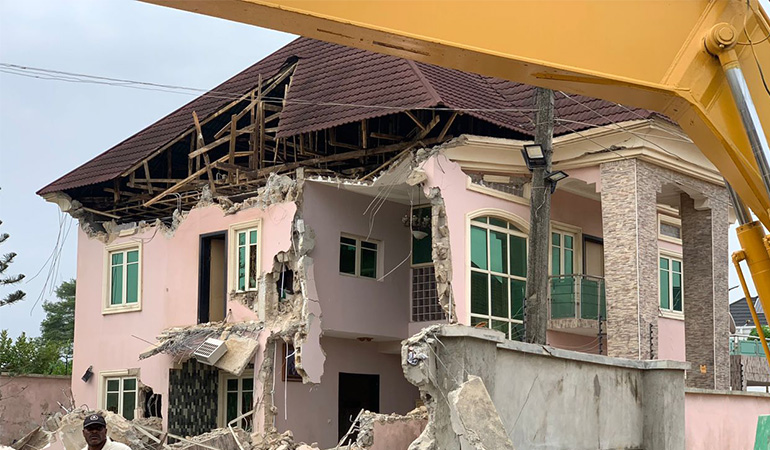
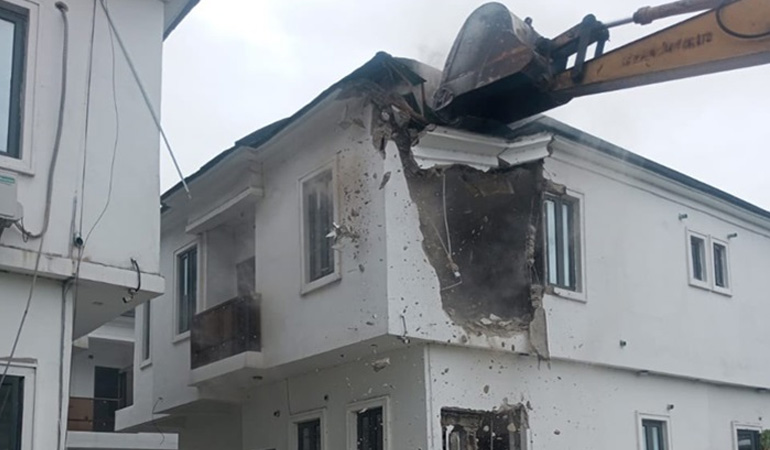
An excavator demolishing an illegal structure in Lagos. Buildings without proper permits or built in restricted zones often face such a fate. Property owners caught in this situation typically receive no compensation for the loss.
Few things are more alarming to a property owner than the word “demolition.” In Nigeria (especially Lagos), authorities have been aggressive in removing structures deemed illegal or unsafe. But why exactly do demolitions happen? Typically, it’s because a building violated planning laws or encroached on restricted land. According to Lagos State regulators, “properties without proper planning permits, approved layouts, or valid titles are considered illegal developments”. Structures built without the required building plan approval or those sited on prohibited areas – such as drainage channels, road setbacks, under high-tension powerlines, or on government-acquired land – are prime targets for demolition. For example, after a spate of building collapses in 2023, Lagos authorities inspected projects and swiftly “ordered the demolition of several structures” that had been erected with no permits, built beyond approved floors, or in dangerous conditions. Many such buildings were considered “illegal and defective structures”, posing risks to the public.
The harsh truth is that most demolitions are preventable. They result from ignored regulations. As one industry expert noted, “many buildings have been marked for demolition because they were erected on roads, powerline corridors, or other restricted areas… most of these demolitions could have been avoided with a proper survey that revealed the land’s actual status.” In other words, had the owners checked the zoning and permit requirements beforehand, they might have built elsewhere or obtained the necessary approvals to avoid destruction.
How do you ensure your project isn’t at risk? First, never build without obtaining a planning permit from the state authorities (for instance, the Lagos State Physical Planning Permit Authority, LASPPPA). It’s illegal to start construction without approval, and doing so almost guarantees trouble down the line. Getting a permit means submitting your architectural plans, engineering designs, and documents for vetting – yes, it’s a process, but it’s non-negotiable for compliance. In Lagos, lack of a building permit was the number one reason cited in recent demolition orders. Also, adhere strictly to the permit’s terms: if you’re approved to build, say, a two-story residential home, don’t suddenly add a third floor or convert it into a factory. Such deviations can render your approval invalid and put you back in the “illegal structure” category.
Second, confirm the land use and planning status of your plot. This is where that survey and title search come in again. A licensed surveyor or planning consultant can tell you if your land lies in a government acquisition area (land reserved by the government for public projects) or if it’s zoned for a different purpose. Many investors have been lured into buying “cheap” plots in fast-growing areas like Ibeju-Lekki, only to later learn those lands were under government acquisition – meaning any buildings there could be removed without compensation. Indeed, the Lagos state government has made it clear that “structures without permits, titles, or built on restricted/government land will not attract compensation” if cleared. In practical terms, that means if you build on land you weren’t supposed to, you could lose everything you built and get nothing back. Verifying that your intended property isn’t on future road expansion, flood plain, or government-reserved land is critical.
Finally, stay updated on local building regulations. Authorities often give deadlines to regularize unapproved buildings – for instance, in late 2025 Lagos sanctioned 176 estate developments that were built on agriculturally zoned land without proper approval, giving them a short window to submit their permits or face enforcement. Don’t let your project reach that point. By working with professionals (surveyors, urban planners, attorneys) and obtaining all necessary approvals before and during construction, you drastically reduce the risk of seeing a bulldozer at your gate.
